
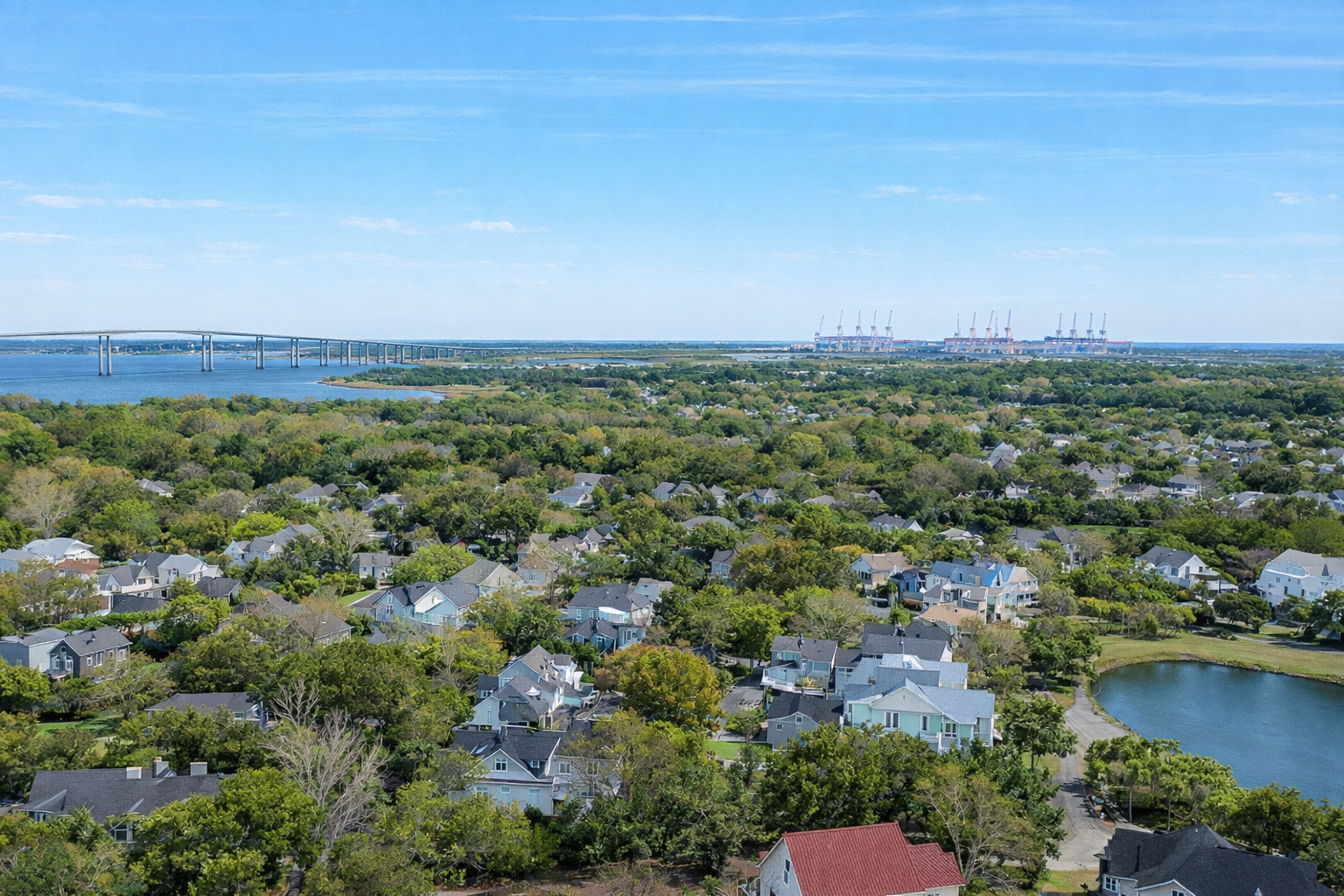
Charleston’s growth is not happening evenly across the region. While some areas are largely built out, others are in the early stages of major transformation driven by infrastructure, new construction, and long term development plans. Understanding where growth is happening helps buyers, sellers, and investors make more informed decisions in a market that continues to evolve.
Charleston’s Growth Is Intentional, Not Random
Charleston’s expansion is not happening by chance.
Growth tends to follow three key drivers:
• Infrastructure investment
• Job and population growth
• Available land for development
When those three factors align, certain areas begin to change quickly. New communities are built, retail follows rooftops, and demand begins to increase.
In 2026, several areas stand out as key growth corridors across the Charleston region.
Clements Ferry and the 29492 Corridor
Few areas in Charleston have seen as much transformation as the Clements Ferry corridor.
This area sits between Daniel Island, Mount Pleasant, and Berkeley County, making it one of the most strategically positioned growth zones in the region.
Key factors driving growth:
• Large scale master planned communities like Point Hope
• Road expansion and infrastructure improvements
• Proximity to major employment centers
• New retail and commercial development
Clements Ferry represents a blend of new construction, long term planning, and accessibility that continues to attract buyers.
I explored the data behind this growth more deeply in The Data Behind the Growth: What the Numbers Say About the 29492 Corridor in 2026.
Johns Island
Johns Island continues to grow as buyers search for more space and a different pace of life.
Located just southwest of downtown Charleston, it offers:
• Larger lots
• New construction communities
• A more rural feel compared to Mount Pleasant or downtown
Growth here has been steady, supported by increasing demand and continued development.
At the same time, infrastructure remains a key conversation point, particularly as population increases.
North Mount Pleasant
Mount Pleasant is one of the most established and desirable areas in the Charleston market.
While much of it is built out, the northern sections continue to evolve.
Growth drivers include:
• Remaining pockets of developable land
• Proximity to top schools
• Continued demand for Mount Pleasant lifestyle
• Expansion toward the Highway 41 corridor
North Mount Pleasant often appeals to buyers who want to be in Mount Pleasant but are open to newer areas slightly further from the historic core.
West Ashley Redevelopment
West Ashley is not new, but it is changing.
Rather than expansion, the story here is redevelopment.
Key trends:
• Renovation and updating of older homes
• Infill development
• Improved retail and dining options
• Increased interest due to proximity to downtown
West Ashley offers an opportunity for buyers who value location and are open to established neighborhoods.
Downtown Charleston Infill and Waterfront Development
Downtown Charleston has limited space, which makes new development more selective and impactful.
Recent and ongoing trends include:
• Infill development projects
• Waterfront redevelopment efforts
• Continued demand for walkability and historic charm
Projects like Union Pier and Magnolia Landing represent a shift toward reimagining how waterfront areas are used.
I discussed this transformation further in Charleston’s Future Skyline: Union Pier, Magnolia, and the Rise of the New Waterfront Districts.
Summerville and the Outer Growth Ring
Beyond the immediate Charleston peninsula, areas like Summerville and parts of Berkeley County continue to absorb population growth.
These areas offer:
• More affordable entry points
• New construction communities
• Larger developments with planned amenities
As Charleston grows, these outer areas play an important role in providing housing supply.
Goose Creek and Emerging Value Areas
Goose Creek has become an increasingly important part of the Charleston growth story, particularly for buyers focused on value and accessibility.
Areas like Woodland Heights and surrounding neighborhoods offer:
• More attainable price points compared to Mount Pleasant and Daniel Island
• Established communities with mature trees and larger lots
• Proximity to major employment centers, including Joint Base Charleston
• Continued demand from both first time buyers and relocating families
While Goose Creek is not positioned as a luxury or coastal market, it plays a key role in the region by providing housing options that remain within reach for a broader range of buyers.
As home prices have risen across the Charleston area, many buyers have expanded their search into Goose Creek, contributing to steady demand and ongoing neighborhood stability.
Why Growth Patterns Matter
Understanding where growth is happening is not just about following trends.
It helps answer important questions like:
• Where new inventory will be available
• Which areas may see increased demand
• How infrastructure may impact daily life
• What long term development could look like
Charleston’s continued growth is closely tied to its job market and population trends. I covered that relationship in How Charleston’s Job Market Is Shaping the Local Housing Market.
Growth tends to follow opportunity.
What This Means for Buyers and Sellers
For buyers, growth areas often offer:
• New construction opportunities
• Long term potential
• Entry points into evolving communities
For sellers, understanding growth can help:
• Position a property effectively
• Highlight nearby development
• Frame long term value for buyers
Every area tells a different story, and understanding that story is key to making confident decisions.
Thinking About Charleston’s Growth?
If you are trying to understand how different areas of Charleston are evolving or how that might impact your home search, I am always glad to talk through it.
Each neighborhood offers a different balance of lifestyle, location, and long term potential.
Carolina One Real Estate | Market Insights Disclosure
Disclaimer: The information provided in this blog is for informational and educational purposes only and does not constitute legal, financial, or investment advice. Market conditions in Charleston and surrounding areas are subject to change without notice. Readers are encouraged to conduct independent due diligence and consult with appropriate professional advisors before making real estate decisions.
Primary Sources
• Charleston Regional Development Alliance (CRDA)
https://www.crda.org
• Berkeley County Economic Development
https://berkeleycountysc.gov
• City of Charleston Planning Department
https://www.charleston-sc.gov
• U.S. Census Bureau
https://www.census.gov
